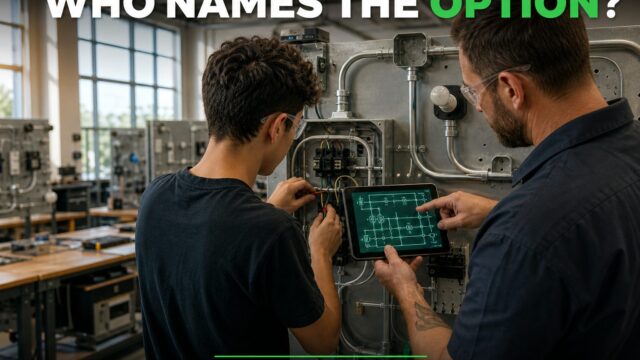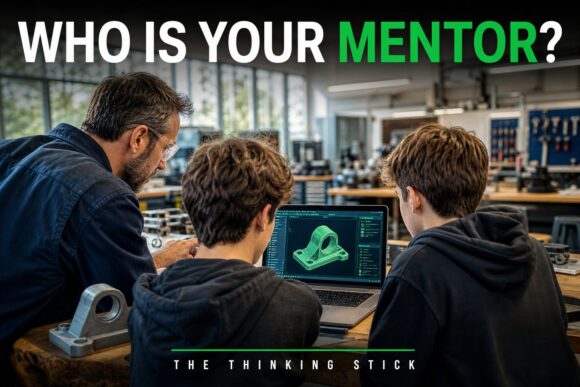
Two numbers jumped out at me this week, and I haven’t been able to stop thinking about them: 58% and 25%. According to the new 2027 US Hiring and Worklife Trends report from Indeed and Glassdoor, 58% of Gen Z workers want a mentor. Only 25% have one. If we are serious about Gen Z school to work, that gap is where I would start. And I don’t think it has to start at the first job. I think it can start in high school.
The same report landed alongside a piece from Indeed Hiring Lab with a title that pretty much sums up what young people are telling us: “Experience Wanted. But Where Do You Get It?” Here’s the thing… schools are one of the few places in a young person’s life that can answer that question before they ever fill out an application.
Key takeaways
- Employers increasingly want experienced hires: Indeed data shows senior-level job postings up 19.2% since January 2025 while entry- and mid-level postings fell about 4%.
- Gen Z wants guidance at work, but most don’t have it: 58% want a mentor and only 25% have one, according to Indeed and Glassdoor.
- High schools can be where the first real experience and the first mentor happen, through pathways, work-based learning and real work for real audiences.
- A career pathway is a promise. Real experience, documented and shown, is the proof.
What’s happening: the bottom rung moved up
On November 18, Indeed Hiring Lab and Glassdoor Economic Research released their outlook for 2027. The entry-level piece, Experience Wanted. But Where Do You Get It?, lays out the catch-22 that so many recent graduates are living. Since January 2025, senior-level job postings are the only ones that have grown. By September 2026 they were 19.2% above January 2025 levels, while entry-level and mid-level postings were each down around 4%. Entry-level postings made up 45.3% of all postings in September 2026, almost four percentage points lower than three years earlier.
Their summary line: “The bottom rung of the career ladder is moving higher.”
It gets harder from there. Using Indeed profiles, the researchers estimate that 50.4% of the class of 2025 was underemployed one year after graduating, meaning they were working in jobs that don’t typically require a degree. For most of the past decade, that number was just under 40%. The recent college graduate unemployment rate they track sat at 5.7%. As they put it, “Landing a job isn’t the same as starting a career.”
Now, what about AI? I want to be careful here, because the headlines usually aren’t. The Indeed researchers say the evidence that AI is causing the entry-level slowdown is “still mixed.” The broader trends report frames it as “AI isn’t taking jobs, but is creating skeptics.” That matters. The squeeze on young workers is real, but it isn’t only an AI story. It’s also a slow-hiring story and an employers-prefer-experience story. Their Glassdoor analysis also found Gen Z the least positive about AI of the generations they compared, with 33% of Gen Z’s AI mentions in reviews being positive.
Then there’s the human part. The report says Gen Z now makes up nearly a quarter of the labor force, and “while 58% want a mentor, only 25% have one.” In Glassdoor reviews, entry-level workers were 47% more likely than more experienced workers to mention training as a positive, and 35% more likely to mention mentorship. Young workers are telling us exactly what helps them. They want someone to learn from.
Meanwhile, on the school side, KCRG reported on November 13 that the Cedar Rapids Community School District in Iowa announced its College and Career Readiness academies for 2027–28: 26 academies across its three high schools, each a three-year program with college-credit coursework, chances to earn industry-recognized credentials and hands-on learning. Every ninth grader will start in a Freshman Academy to explore career paths. The rollout hasn’t been simple. The district first presented the plan in 2024, parents raised concerns about how it would be delivered, and hundreds signed a petition to slow it down. Superintendent Tawana Lannin put the goal this way: “Our promise is that students graduate with more than a diploma.”
Gen Z school to work starts with a person, not a program
I love that line from Cedar Rapids. More than a diploma. That’s the right promise. And I respect that the district slowed down and listened when parents pushed back. That’s leadership.
But put the two stories side by side and a question jumps out. If employers want experience, and young workers say what they’re missing most is a mentor, what does “more than a diploma” actually need to include?
Courses alone won’t do it. A credential helps. College credit helps. But the thing the Indeed data says is getting scarce is the chance to do real work, with someone more experienced alongside you, and to come out the other side able to show what you did. That’s exactly what a mentor provides at work. It’s also exactly what a good internship, apprenticeship or real-world project can provide in high school.
So here’s my reframe: a pathway is a promise. Experience is the proof.
Schools are getting good at the promise. A lot of districts now have academies, pathways and career clusters on paper. The harder part is the proof: Does every student in that pathway get real feedback from an adult who does that work for a living? Do they make something for an audience beyond their teacher? Can they show it to an employer?
I wrote about this back in 2013 in Millennials and the Job Market, when I argued that a public digital portfolio and real work matter more than a paper resume. The generation has changed. The point hasn’t. If anything, a market where a degree “cannot create an opening,” to borrow Indeed’s words, makes it even more important that students graduate with evidence of what they can do, and at least one adult outside of school who has watched them do it.
Who is supposed to be the mentor?
This is where I think schools and employers keep waiting on each other. Employers say schools should send them ready graduates. Schools say employers should open their doors. Students sit in the middle and wait.
The Indeed and Glassdoor report gives employers clear advice: pair early-career hires with mentors and hire for skills, not pedigree. I agree. But I’d push it one step earlier. What if the mentoring relationship started at 16 instead of 22? What if a local engineer, nurse, electrician or marketing manager met with a small group of pathway students a few times a semester, looked at their work and told them the truth about it?
I’ll admit that’s a lot to ask of busy professionals. But it’s a lot less than asking a 22-year-old to figure out a career alone, in a slow hiring market, after four years of tuition. And employers get something too: a pipeline of young people who already know their work, and a chance to see who’s good before the job posting ever goes up.
This is what “Preparing students for their future, not our past.” looks like in practice. Our past assumed the first job would teach you the job. The first rung was where you learned. The data says that rung is harder to reach right now. So we can’t wait for the first job to provide the first mentor.
In Human Still Required, I argue that AI can draft, summarize and analyze, but judgment, relationships and trust have to stay human. Mentoring is about as human as it gets. No tool replaces an adult who knows the work saying, “This part is strong. This part wouldn’t fly on a real job site. Here’s why.”
What schools can do this week
- Count your mentors, not just your pathways. For each academy or CTE program, how many students have at least one adult from that industry who has given them feedback on their work this year? If you don’t know, that’s your first data point.
- Ask three local employers for one hour a month. Not a career fair booth. A recurring hour where a professional reviews student work with a small group. Small and consistent beats big and once a year.
- Make experience visible. Have pathway students document projects, credentials and feedback in a portfolio they own and can share. If a student did real work, they should be able to show it, not just list it.
- Talk about AI honestly. Gen Z workers are skeptical of AI, and many students are anxious. Use the actual data in class: the evidence on AI and entry-level jobs is still mixed. Teach them how professionals in their pathway are using it, and where human judgment still matters.
- Ask your students. Survey juniors and seniors: Do you have an adult outside of school you could ask about a career? The answer will tell you more than any pathway brochure.
Frequently asked questions
Why is it harder for Gen Z to get an entry-level job right now?
Indeed data released November 18, 2026 shows senior-level job postings up 19.2% since January 2025, while entry-level postings fell about 4%. Employers increasingly prefer experienced hires, and entry-level postings attract many more applications per opening. Researchers say the evidence that AI is the cause is still mixed.
How can high schools help students get work experience?
Through career pathways that include real work-based learning: internships, apprenticeships, industry-recognized credentials and projects reviewed by professionals. The key is that students do authentic work with feedback from adults in the field, and can document and show what they did.
Why does mentoring matter so much for young workers?
According to Indeed and Glassdoor, 58% of Gen Z workers want a mentor but only 25% have one, and entry-level workers are more likely to name training and mentorship as positives at work. A mentor shortens the learning curve that the first job used to provide.
Is AI taking entry-level jobs from Gen Z?
Not clearly, at least not yet. Indeed and Glassdoor describe AI’s impact so far as broad but shallow and say the evidence linking AI to the entry-level slowdown is still mixed. What is clear is that young workers are anxious about it, which is a reason to talk about it openly in school.
The first mentor shouldn’t arrive at 22
Districts like Cedar Rapids are doing the hard work of building the structure. That’s worth celebrating. The next step is filling those structures with people: adults who know the work and are willing to spend time with students before they are employees.
If your school or organization is trying to build that bridge between classrooms and careers, this is the work I do with leaders every week. You can find me at JeffUtecht.com.
So let me ask you: how many of your students could name one adult outside of school who has looked at their work and given them real feedback about a career? And what would it take to make that number all of them?
Sources
- Experience Wanted. But Where Do You Get It? — Indeed Hiring Lab & Glassdoor Economic Research, November 18, 2026
- Indeed & Glassdoor’s 2027 U.S. Hiring and Worklife Trends Report — Indeed Hiring Lab & Glassdoor Economic Research, November 18, 2026
- Cedar Rapids schools to roll out College and Career pathways next fall — KCRG Staff, November 13, 2026